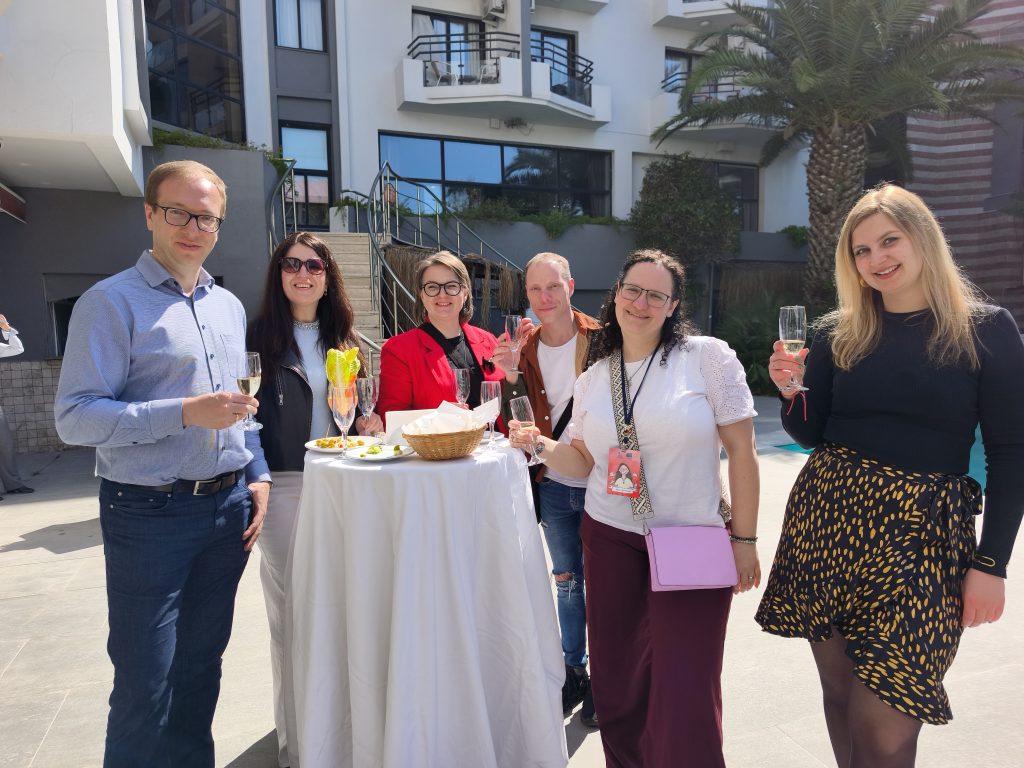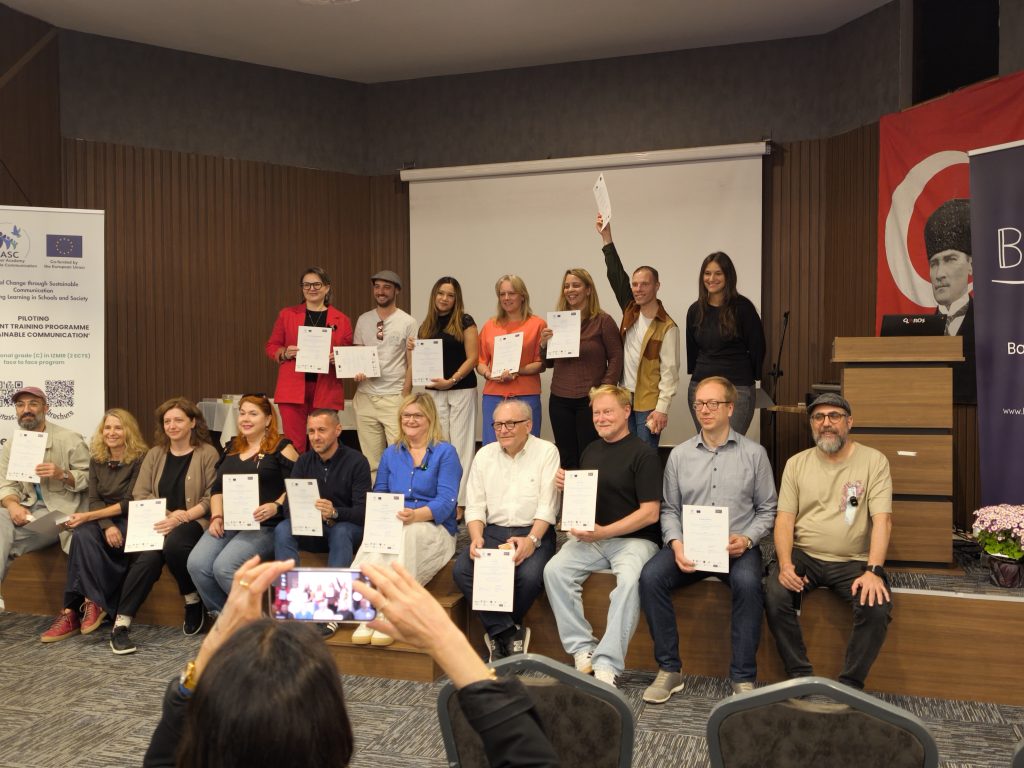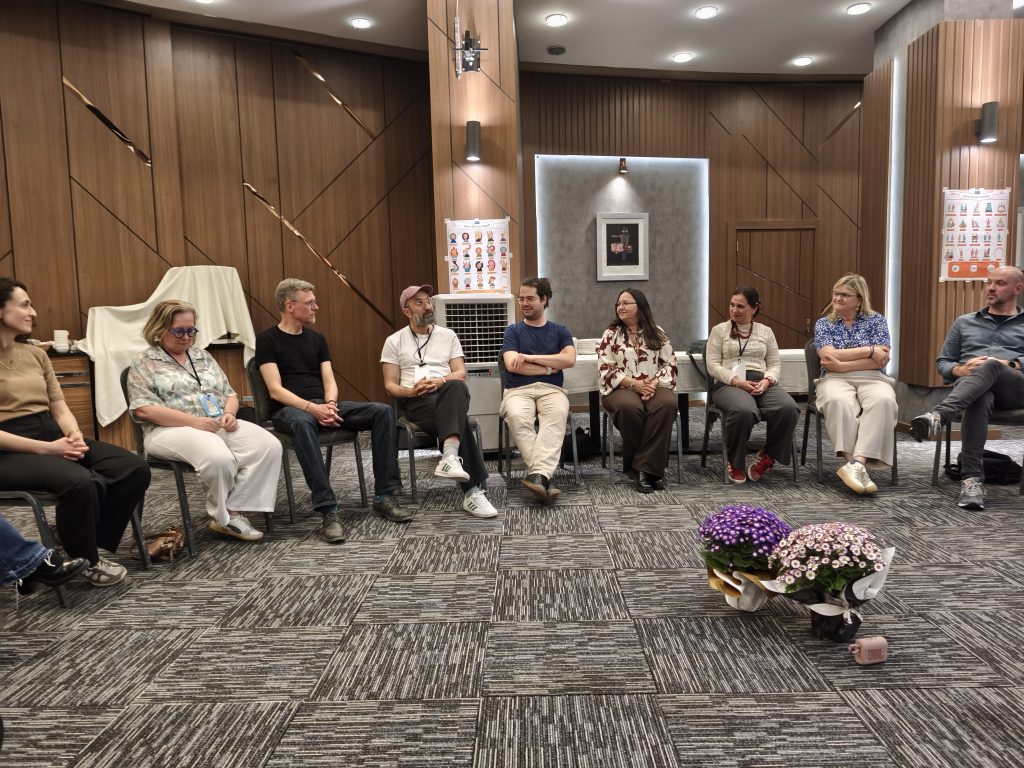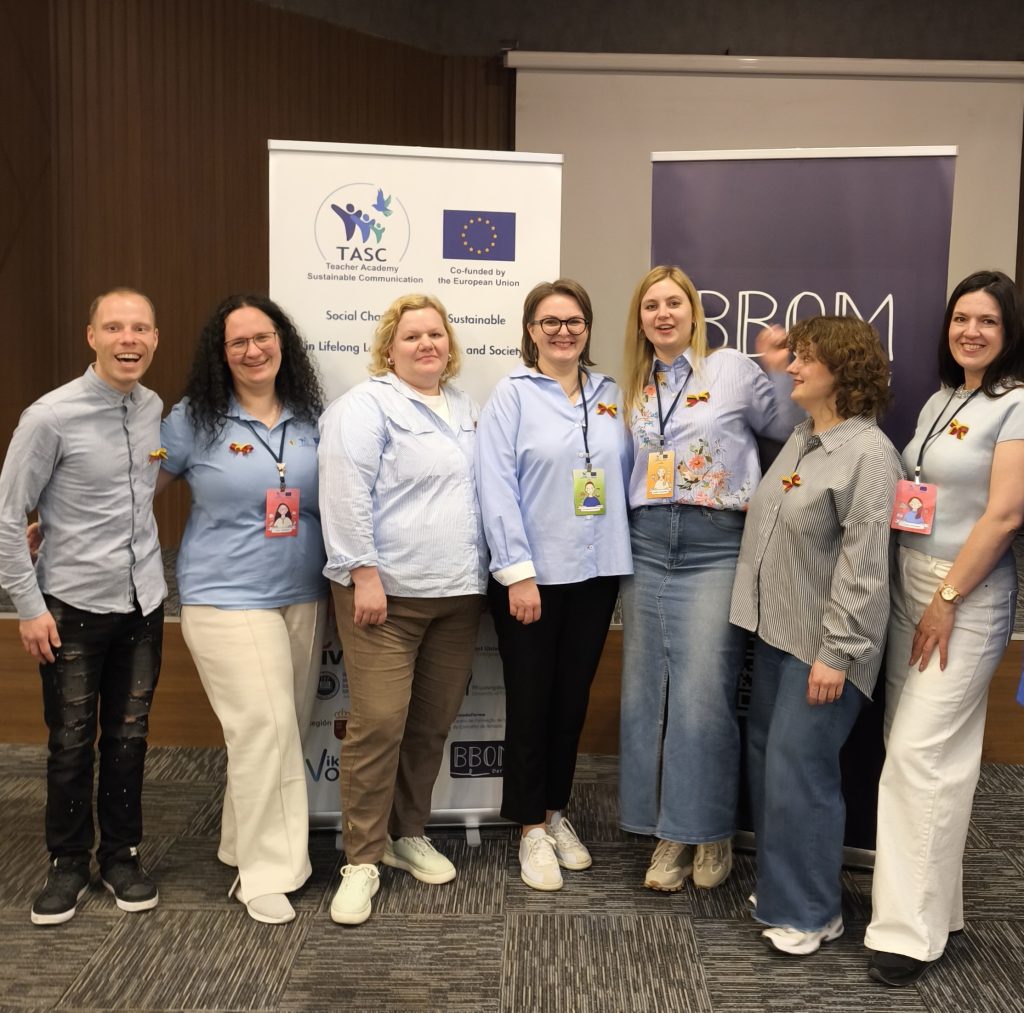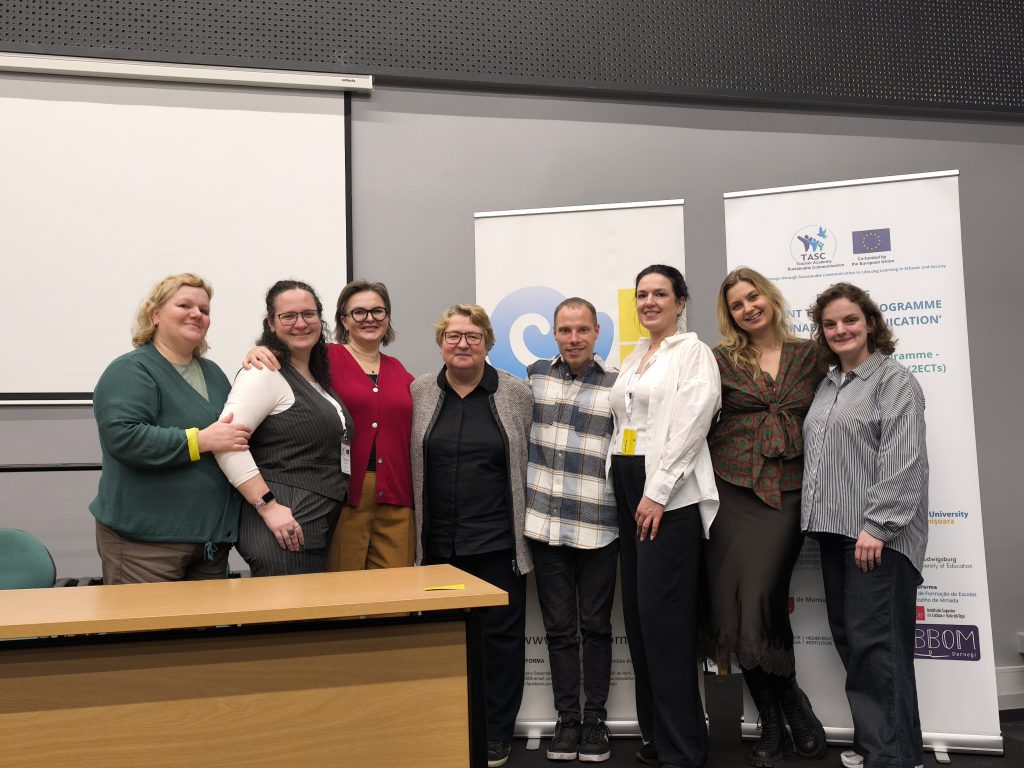
From 7 to 14 March 2026, the TASC consortium organized Level C training in sustainable communication in Çeşme, Turkey, for teachers from the seven countries participating in the TASC activities (Belgium, Spain, Lithuania, Portugal, Romania, Turkey, and Germany). Among other teachers, six teachers from Lithuania successfully completed the training in Çeşme: Gintarė Akucevičienė, Talina Nechamkina, Dovydas Paslauskas, Milda Pošiūtė-Žebelienė, Evelina Pšetulskienė, and Vilma Žiedavainytė-Bieliūnienė. The training was led by teacher trainers from various European countries. Lithuania was represented by lecturers from the Faculty of Pedagogy at Vilniaus Kolegija: Assoc. Prof. Dr. Vaidotas Valantiejus, Gabrielė Kizytė, and Aušra Simoniukštytė.
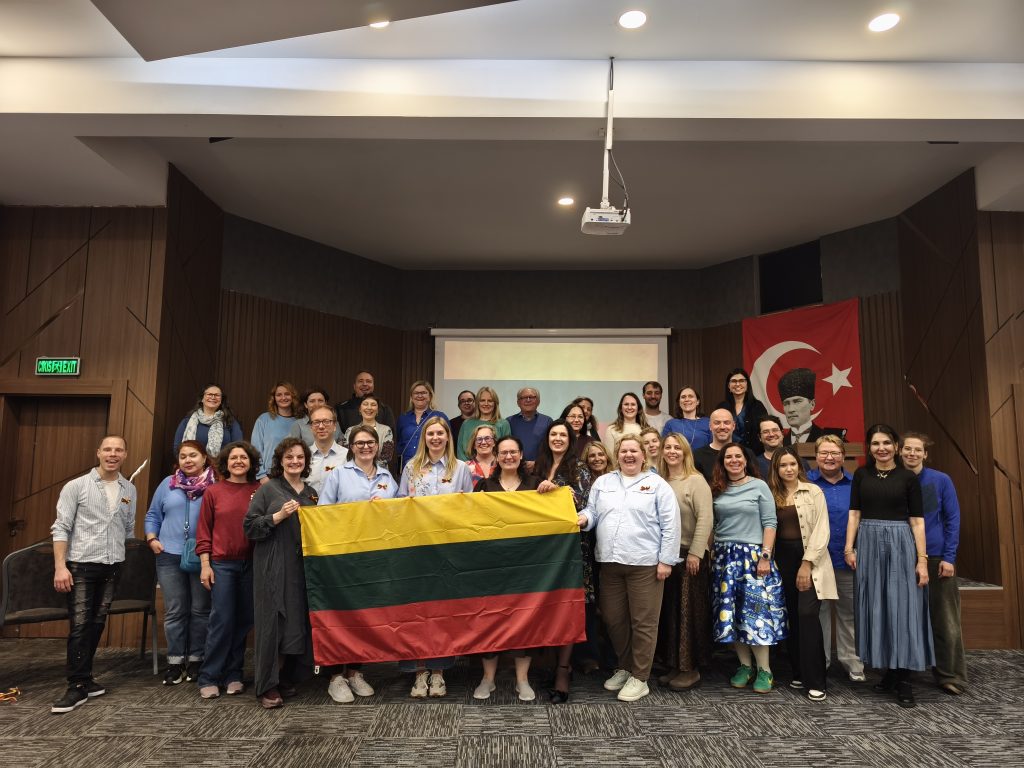
During the meeting in Turkey, teachers from Lithuania organized a commemoration of Lithuanian Independence Day, which was joined by teachers from other countries. The educators noted that participation in the TASC project not only brought together teachers from different countries but also forged bonds of friendship among them, transforming the TASC community of practitioners, in the teachers’ words, into a “European TASC family.”
The training was led by teacher trainers from various European countries. Lithuania was represented by lecturers from the Faculty of Pedagogy at Vilniaus kolegija: Assoc. Prof. Dr. Vaidotas Valantiejus, Gabrielė Kizytė, and Aušra Simoniukštytė.
The Teachers Academy for Sustainable Communication (TASC) is an Erasmus+ project in which twelve partners from seven countries have jointly developed an international, 20-credit training programme designed to foster teachers’ sustainable communication competencies. TASC aims to help European teachers acquire the communication skills necessary to become proactive and reflective educators capable of preventing discrimination, polarization, exclusion and violence in schools as well as in society.