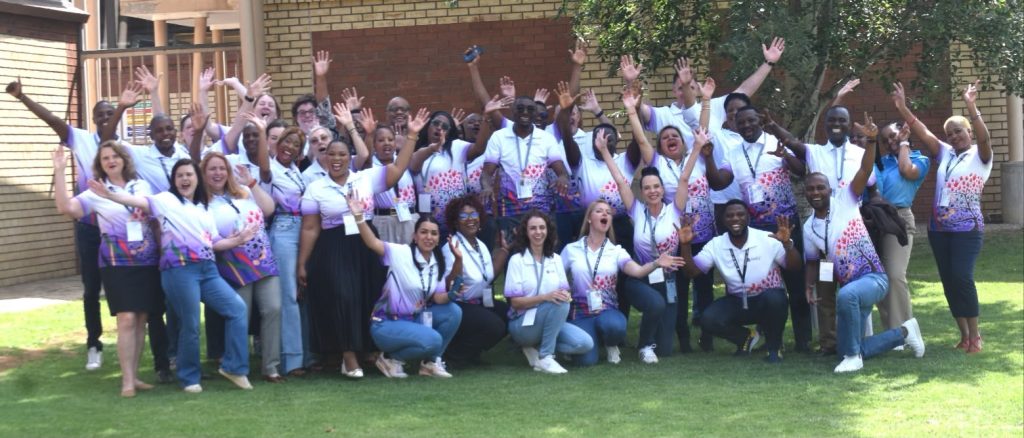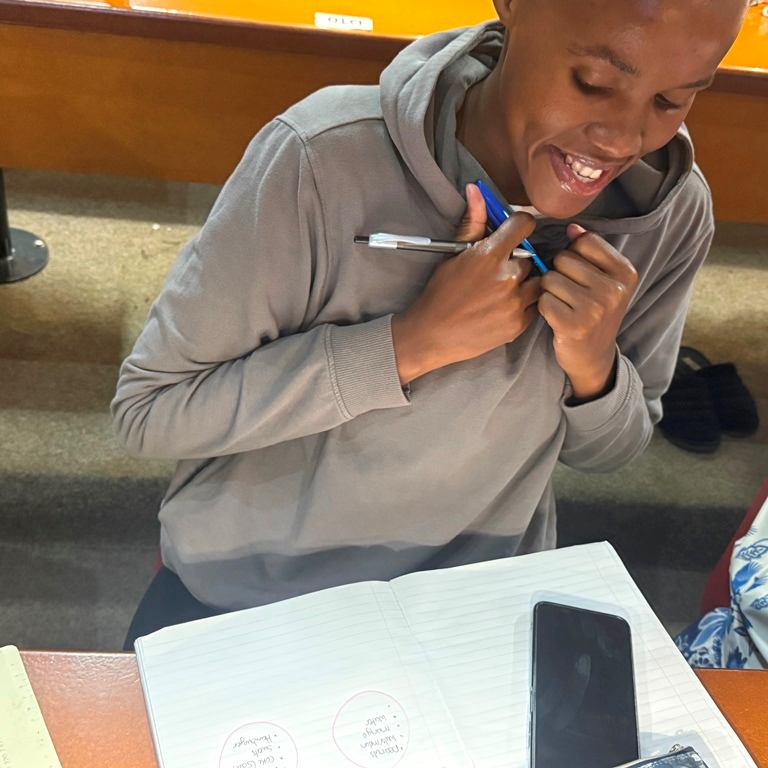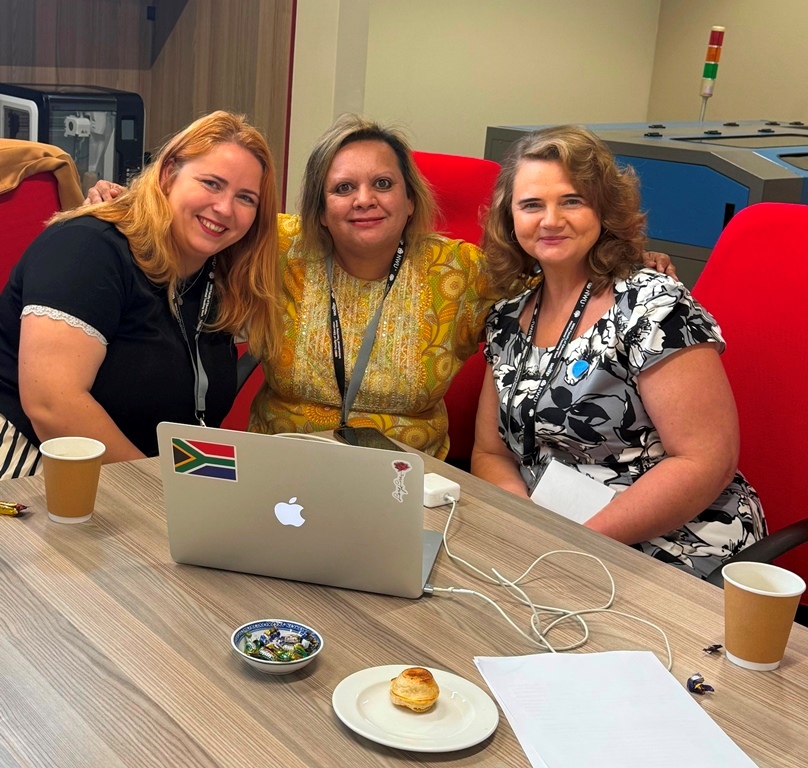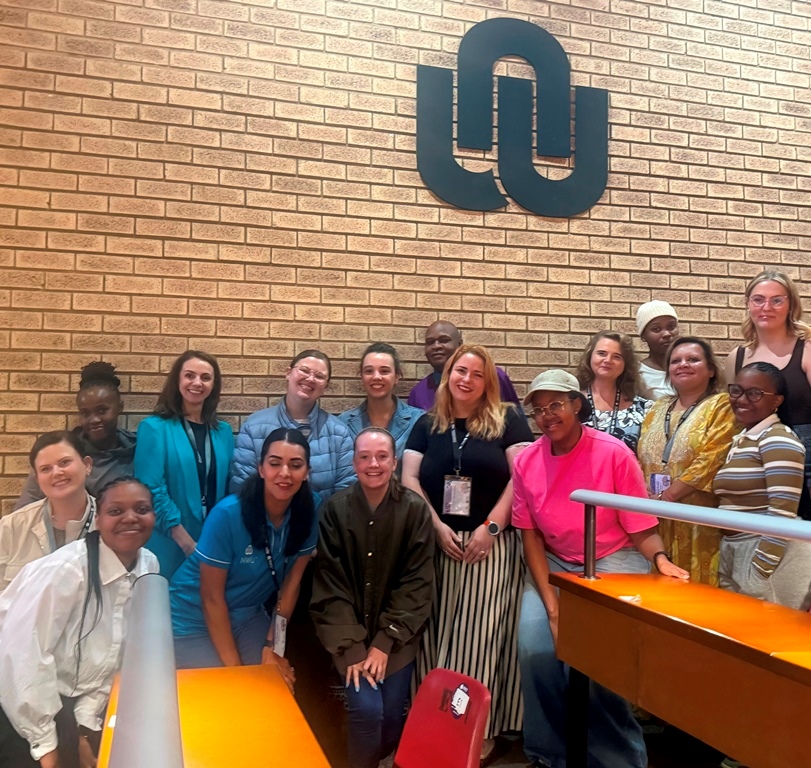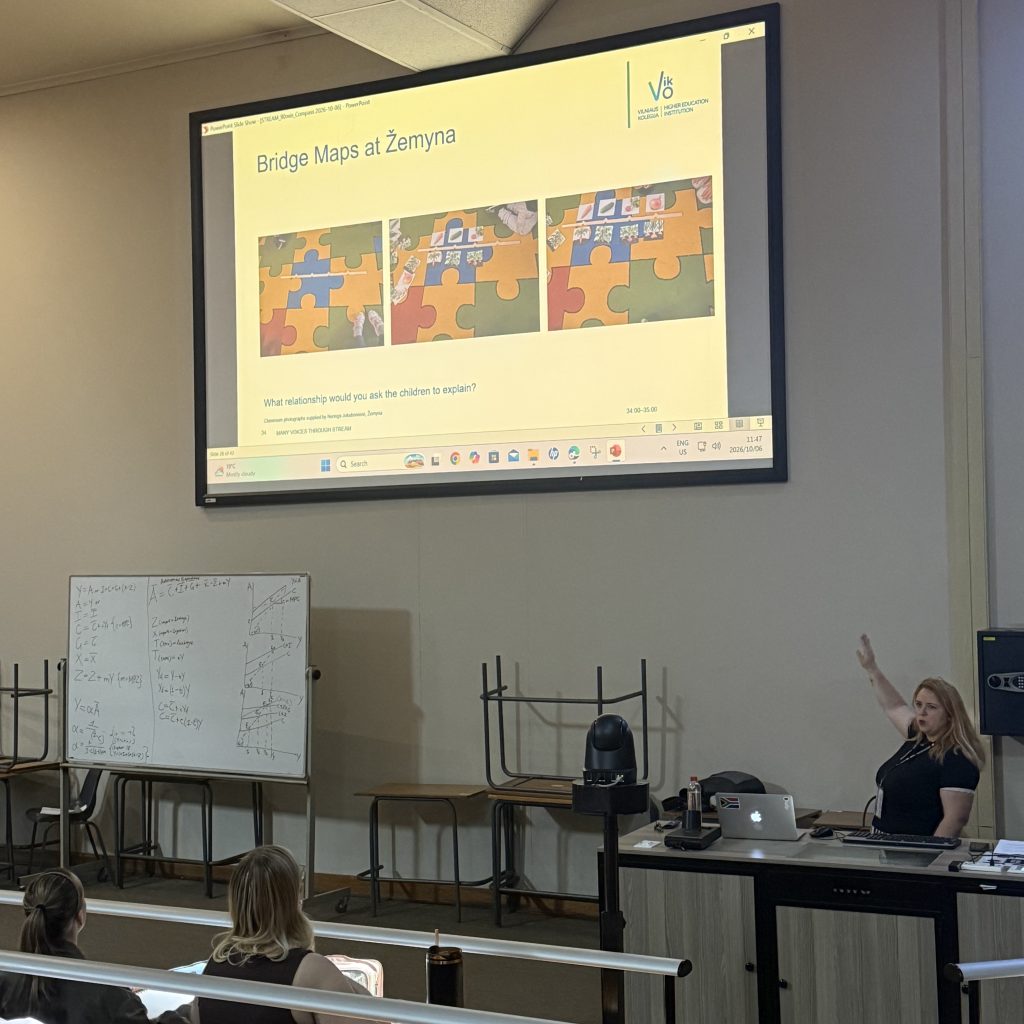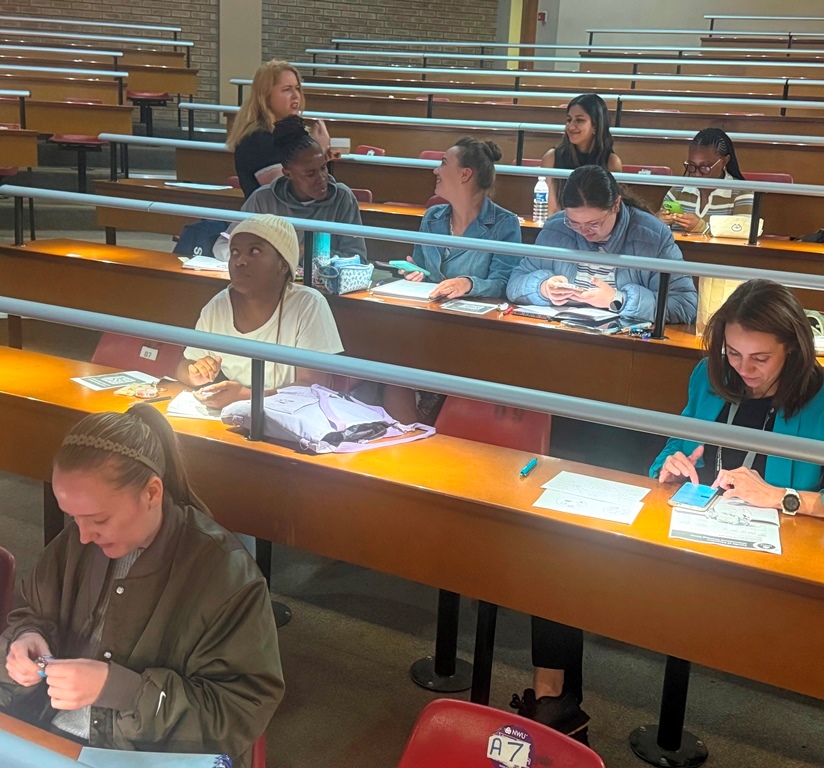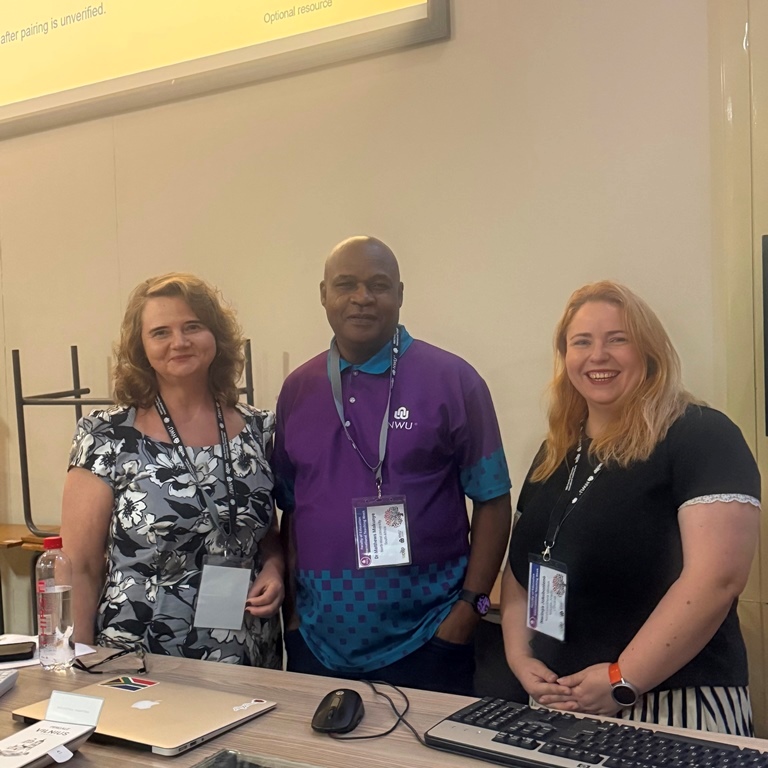
Collaboration with colleagues from the Republic of South Africa, established during Vilniaus Kolegija’s (VIKO) International Week in 2026, led to a new opportunity: an invitation to participate in International Teaching Week. From 5 to 9 October, Associate Professor Dr Renata Kondratavičienė of the Faculty of Pedagogy at VIKO and second-year student Neringa Jokubonienė, a teacher at Vilnius Žemyna Nursery-Kindergarten, delivered training for future educators at the Faculty of Education of North-West University (NWU) in Vanderbijlpark. In the interactive seminars “Many Voices through STREAM” and “Many Voices from the Start”, they demonstrated how STREAM education and thinking tools can help educators better understand children’s reasoning and engage every child in learning activities.
During the training, the lecturer and student explained how prospective teachers at the Faculty of Education of VIKO are prepared to apply the STREAM approach. In the course “Curriculum Design Using STREAM”, students learn to integrate science, technology, engineering, the arts, mathematics and language education into collaborative project-based activities. Reading and writing are linked to the ability to understand information, ask questions, explain discoveries and reflect on experiences. Students design projects, implement them during teaching practice, analyse children’s work and identify opportunities for improvement. In this way, they learn to plan educational activities in which children investigate, create, collaborate and justify their decisions, while connecting the topics explored to everyday life and the development of values.
The participation of a teacher from Vilnius Žemyna Nursery-Kindergarten reflected the institution’s long-standing experience as a Thinking School. Since 2015, Žemyna has consistently fostered a learning culture that encourages children to ask questions, explain their ideas, listen to others and reflect on the learning process. The institution holds Advanced Thinking School status. An external evaluation report prepared on behalf of the University of Exeter in January 2026 noted that Thinking Maps, Thinking Hats, Habits of Mind and higher-order questions are integral to the institution’s educational culture. Teachers observe children’s learning, reflect on their own practice, collaborate and share their experience with other schools. During the training, N. Jokubonienė presented methods used in everyday pre-primary classroom activities, together with specific examples of children’s work. As both a VIKO student and a teacher at Žemyna, she connected teacher education with classroom practice: students at the Faculty learn to design STREAM activities, while teachers in educational settings implement them, observe children’s responses and refine their teaching.
This connection was illustrated by the project “Food for Us and the Earth”, implemented in a pre-primary group at Žemyna and presented by R. Kondratavičienė and N. Jokubonienė. During the project, children explored food products, considered healthy choices and the responsible use of resources, and expressed their ideas using Thinking Maps. Using a Double Bubble Map, they compared two snack selections, placing shared characteristics in the centre and differences beside the corresponding selection. The teacher encouraged them to compare the same characteristics and explain their observations. For example, when comparing slices of bread, one child noticed that one contained fewer seeds and the other more.
Using a Tree Map, children grouped food cards, drawings or written labels and explored the rule connecting items in each group. One child’s suggestion to classify potato crisps as vegetables showed why it is important to listen to children’s reasoning and understand the criteria they use: a product’s origin and its health benefits are different bases for classification. With a Bridge Map, children linked plants to their edible parts, for example, a carrot plant to its root and a tomato plant to its fruit. The teacher encouraged them to explain these relationships and find other pairs connected by the same principle. This made it possible to observe whether a child could apply an understood relationship to a new example.
The seminar also explored why a child’s completed Thinking Map should be considered alongside the child’s explanation and the support provided: whether the child made a decision independently, in response to a teacher’s question or by following a demonstrated example. This information helps educators understand children’s views about food and plan subsequent activities. The project’s educational focus aligns with the aims set out in Lithuania’s General Curriculum for Pre-primary Education and competency descriptions: helping children understand the importance of healthy eating, care for their health and justify their choices. Participants designed and compared models of snack boxes, created Thinking Maps and practised asking questions that help children explain their decisions. In this way, the experience of Žemyna’s teachers became practical learning material for future educators.
After the seminar, South African students created a map of good wishes for the Lithuanian pre-primary children who had taken part in “Food for Us and the Earth”. On the leaves of a tree-shaped map, they wrote messages to the children of Vilnius Žemyna Nursery-Kindergarten whose activities and work they had explored during the training. This allowed the prospective teachers to address the young project creators directly and express their support. The activity added a personal dimension to the exchange of educational experience by recognising the children and their discoveries. Discussing these messages in the classroom will offer the children an opportunity to learn more about South Africa and talk about how their work sparked the interest of future teachers studying in another country.
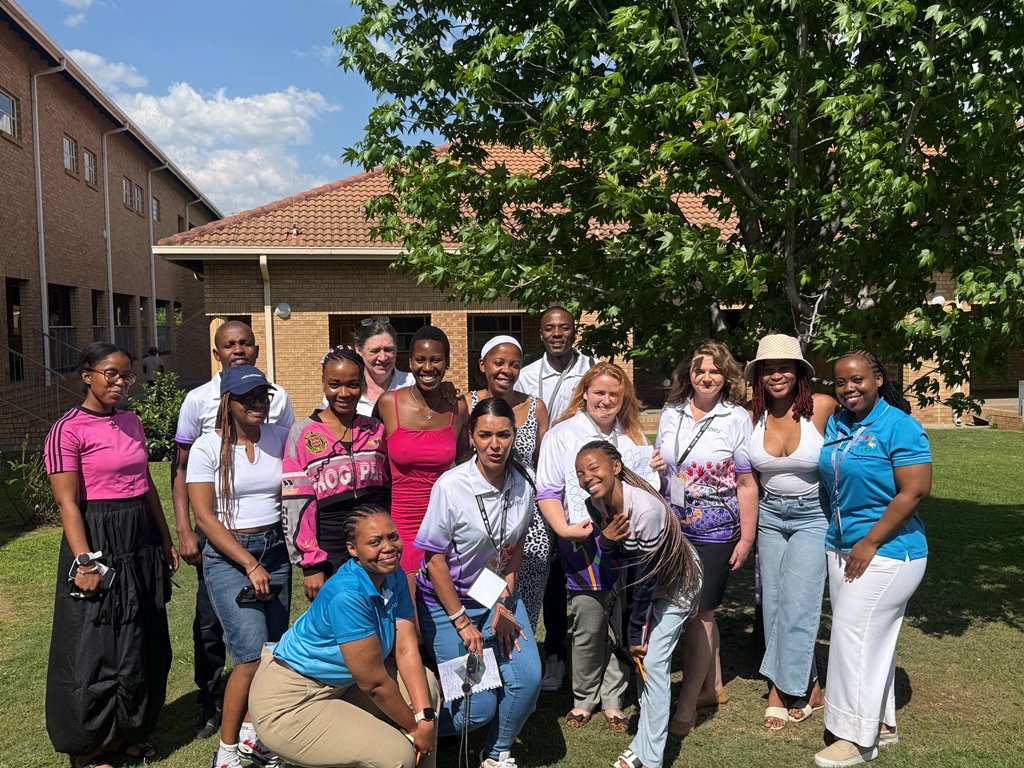
During International Teaching Week, existing relationships were strengthened and new connections were established with educators and researchers from other countries. The joint training sessions and discussions about education generated ideas for further collaboration. The participants hope to meet their colleagues again in Lithuania during International Teaching Week at VIKO, scheduled for 1–5 March 2027.